

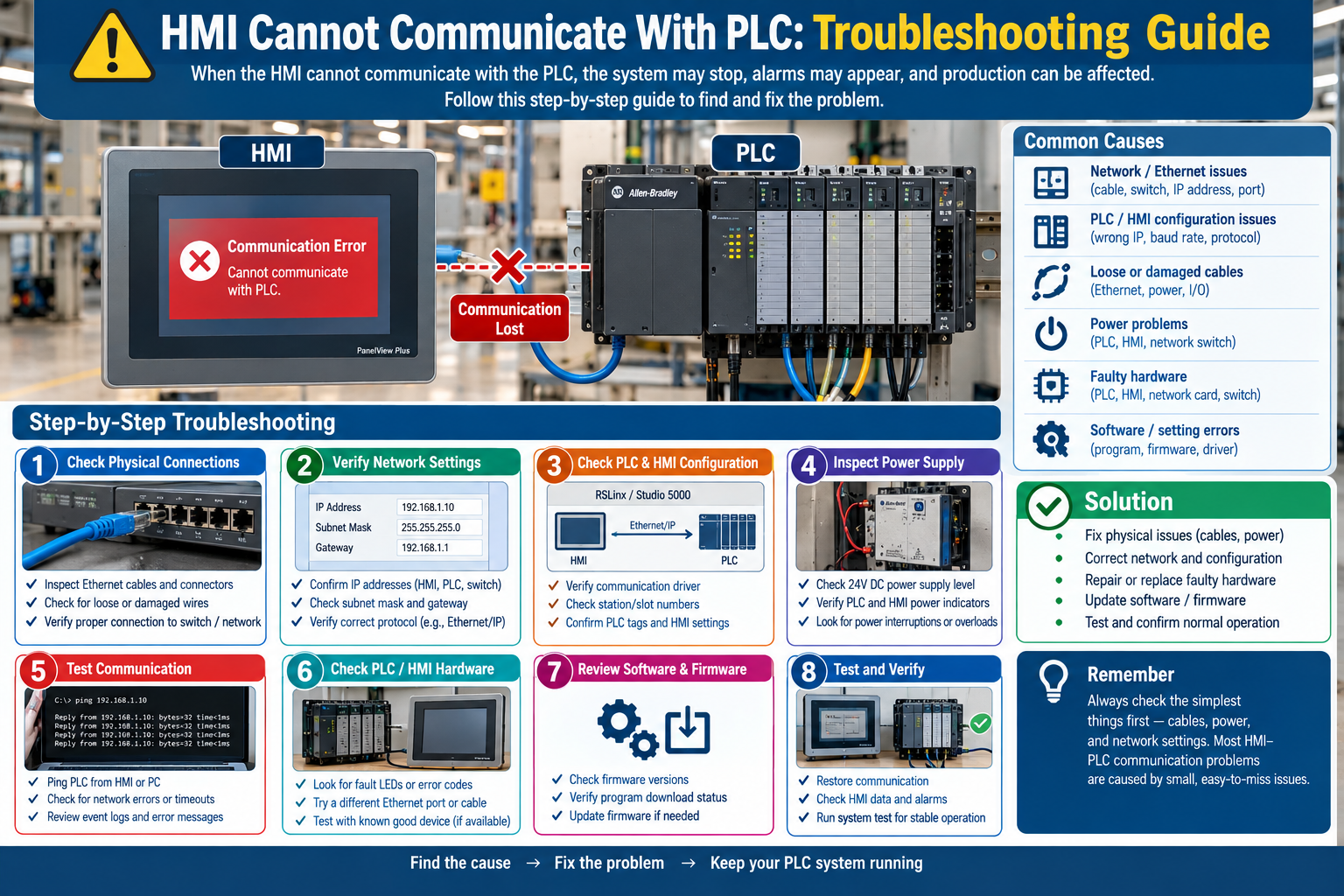
HMI Cannot Communicate With PLC: Troubleshooting Guide
10/6/2026
When an HMI cannot communicate with a PLC, the machine operator may suddenly see an offline screen, communication error, frozen data, missing values, or incorrect machine status.
HMI-to-PLC communication problems are common in industrial automation systems. The cause may be something simple, such as a disconnected Ethernet cable, incorrect IP address, or loss of power. However, communication failures can also result from PLC configuration changes, network problems, firmware compatibility, damaged communication hardware, or electrical interference.
This guide explains how to troubleshoot an HMI that cannot communicate with a PLC, including Ethernet, IP address, network, communication settings, PLC configuration, and hardware problems.
Read more →
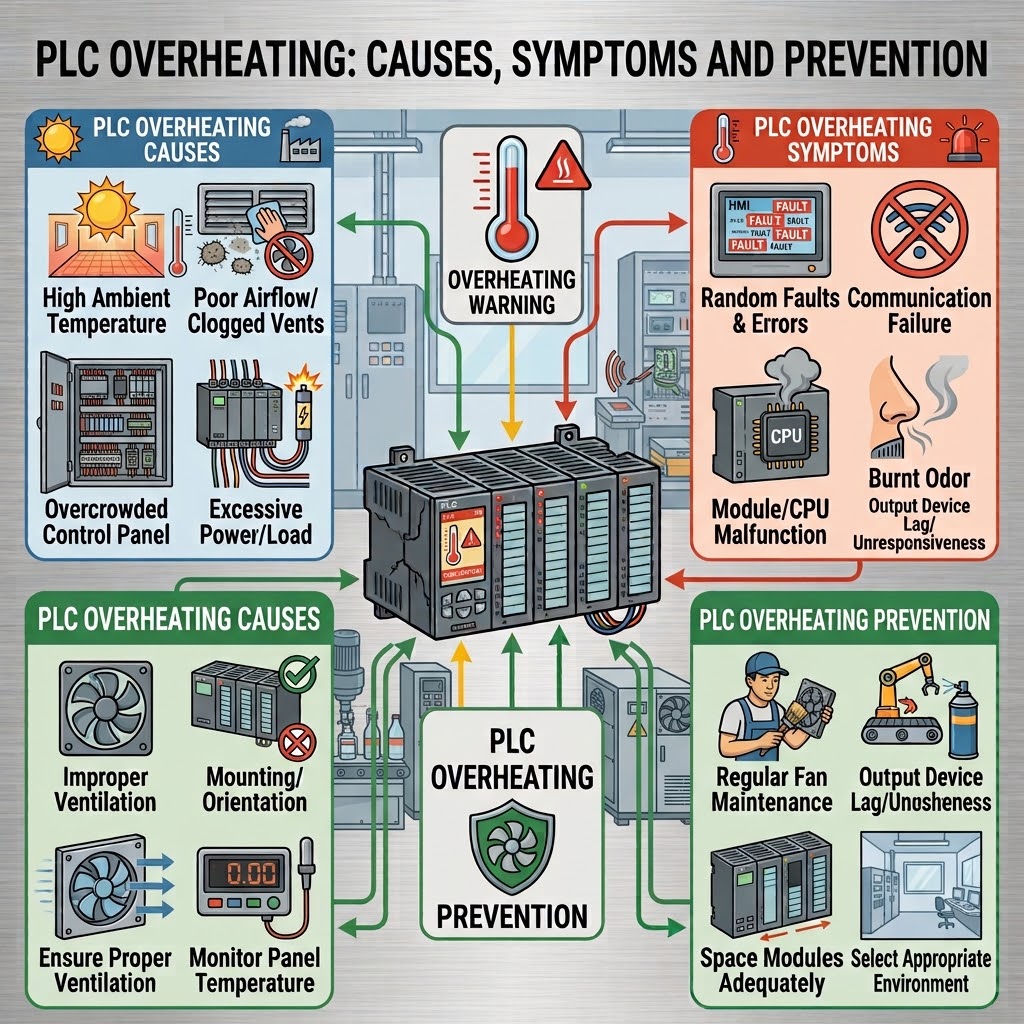
PLC Overheating: Causes, Symptoms and Prevention
10/2/2026
PLC overheating is a common concern in industrial automation systems.
Programmable logic controllers operate inside control cabinets, electrical panels, machine enclosures, and production environments where temperature, airflow, dust, electrical loads, and equipment density can affect system reliability.
Excessive temperature can contribute to:
• PLC CPU faults
• I/O module problems
• Communication failures
• Intermittent PLC faults
• Electronic component degradation
• Unexpected machine shutdowns
• Shortened equipment life
However, a PLC that is experiencing an abnormal temperature should not automatically be assumed to be defective.
The source may be the control cabinet, cooling system, surrounding equipment, power supply, electrical load, or environmental conditions.
This guide explains the common causes of PLC overheating, symptoms to look for, troubleshooting methods, and ways manufacturing plants can prevent temperature-related PLC failures.
Read more →
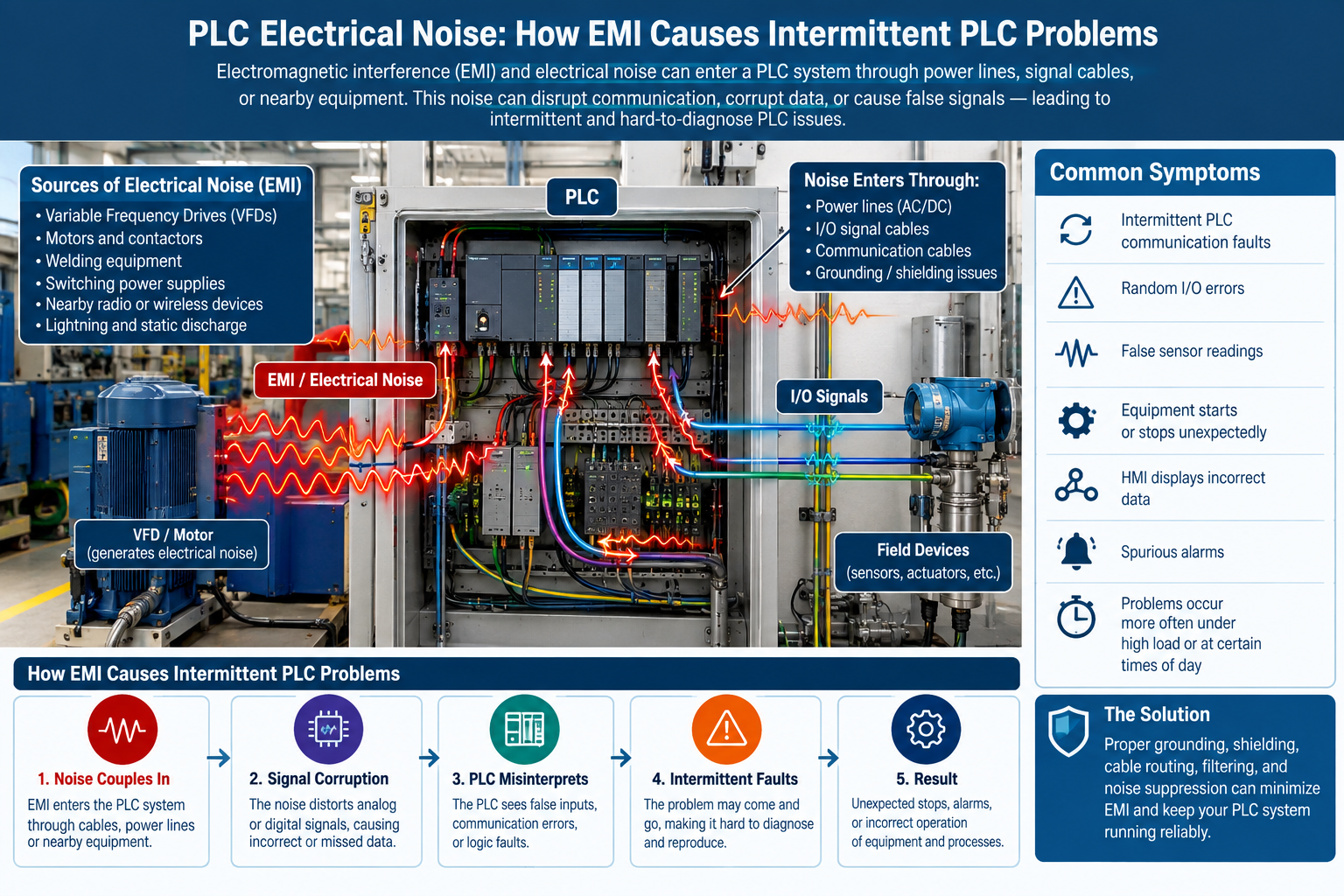
PLC Electrical Noise: How EMI Causes Intermittent PLC Problems
10/6/2026
Industrial PLC systems can operate reliably for years, but electrical noise and electromagnetic interference (EMI) can cause difficult-to-diagnose intermittent problems. A PLC may work normally for hours and then suddenly lose communication, read an incorrect sensor signal, trigger a false input, reset, or stop the machine.
These problems are particularly common in manufacturing environments with VFDs, servo drives, motors, welding equipment, contactors, solenoids, transformers, and high-current electrical equipment.
The challenge is that electrical noise problems often do not produce a permanent failure. The PLC may appear to be working correctly when a technician arrives.
This guide explains how to identify PLC electrical noise, common EMI sources, troubleshooting methods, and ways to prevent intermittent PLC problems.
Read more →
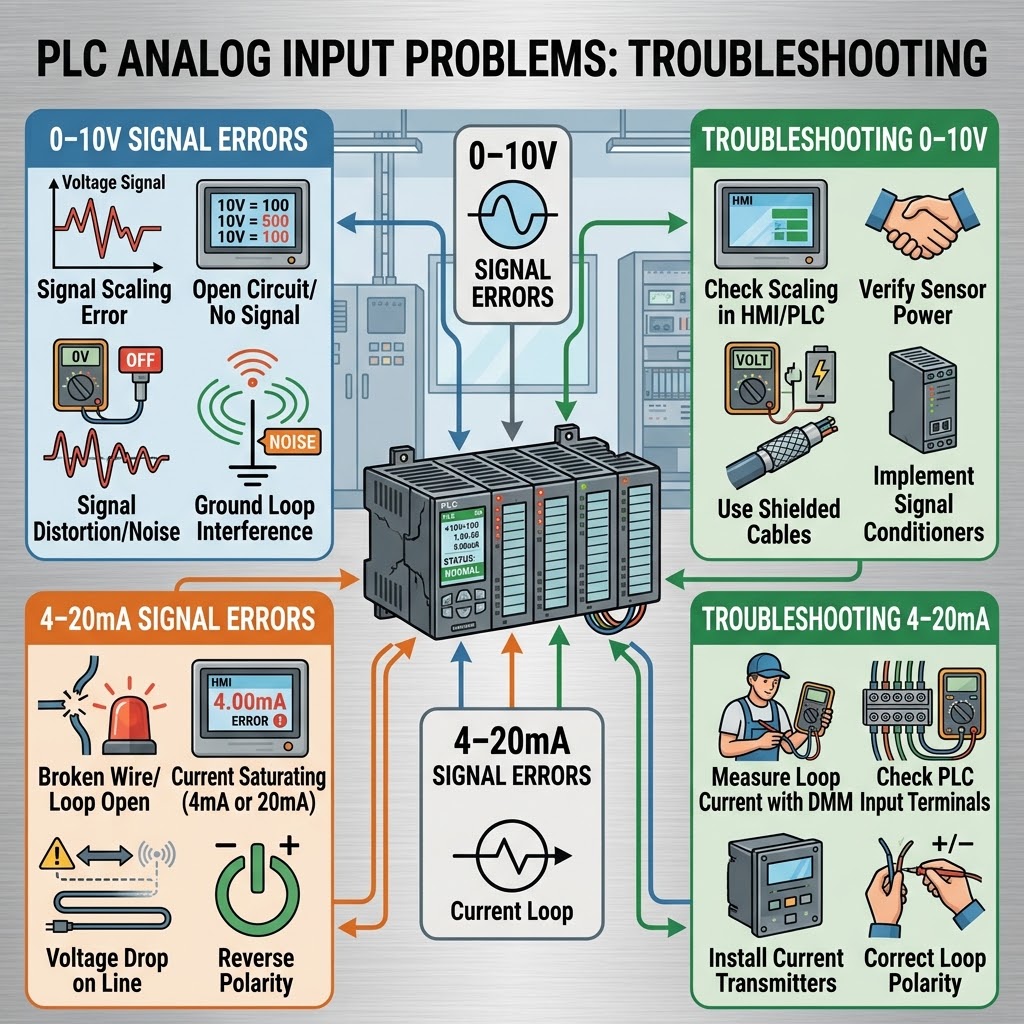
PLC Analog Input Problems: 4–20mA and 0–10V Troubleshooting
10/2/2026
Analog inputs are critical in modern manufacturing automation systems.
Unlike a simple digital input that is typically ON or OFF, an analog input allows a PLC to monitor continuously changing values such as:
• Pressure
• Temperature
• Flow
• Level
• Position
• Speed
• Force
• Weight
• Current
• Voltage
• Distance
Common industrial analog signals include 4–20 mA and 0–10 V.
When a PLC analog input is not working correctly, the problem may come from the sensor, transmitter, wiring, power supply, analog input module, PLC configuration, or signal scaling.
This guide explains the most common PLC analog input problems, how to troubleshoot 4–20 mA and 0–10 V signals, and how to determine whether the problem is electrical, hardware-related, or caused by PLC software configuration.
Read more →
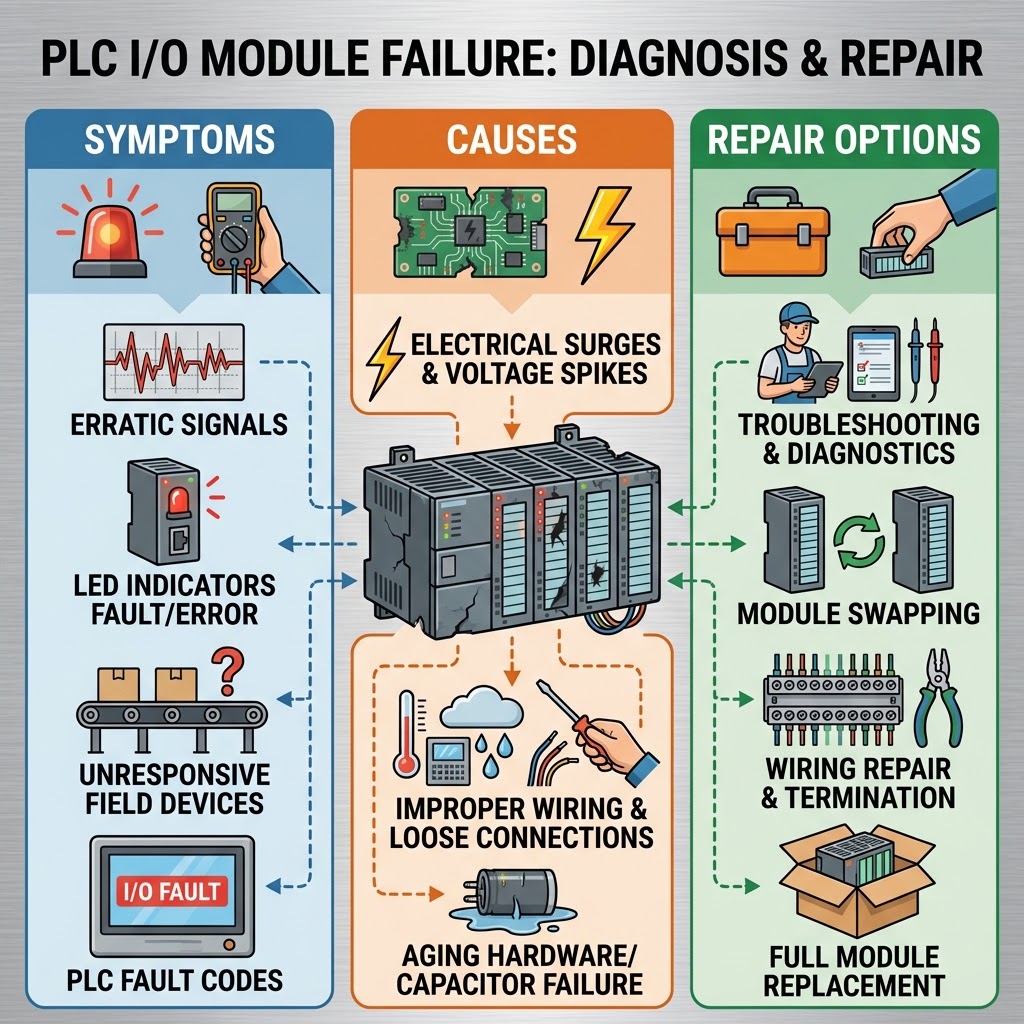
PLC I/O Module Failure: Symptoms, Causes and Repair Options
10/2/2026
A PLC I/O module is the connection between the PLC controller and the physical equipment in a manufacturing machine.
Sensors, switches, valves, contactors, motors, actuators, and other field devices rely on PLC input and output modules to exchange signals with the control system.
When a PLC I/O module fails, the result can range from a single sensor or actuator not working to an entire production process stopping.
Understanding the symptoms of PLC IO module failure can help maintenance technicians identify the problem faster and determine whether the module should be repaired, replaced, or upgraded.
This guide explains common PLC I/O module failure symptoms, causes, troubleshooting methods, and repair options.
Read more →
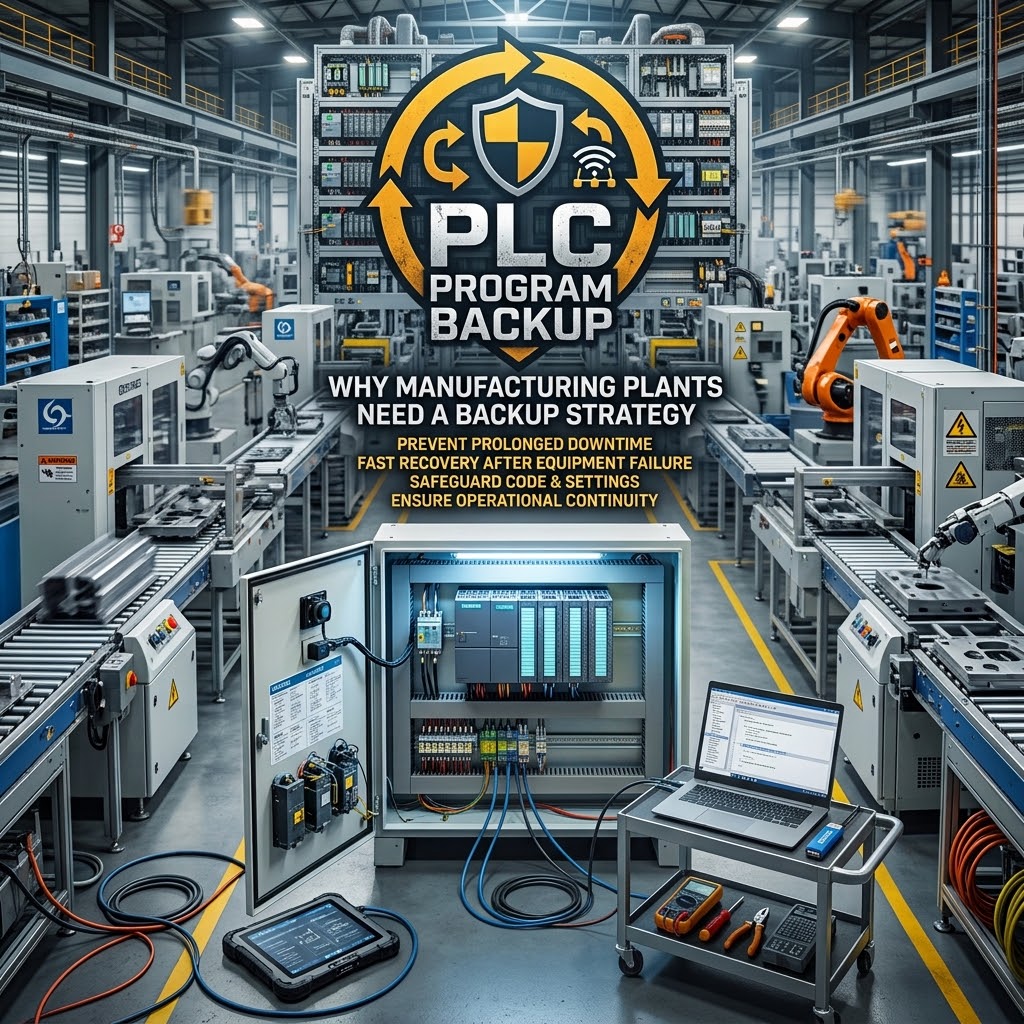
PLC Program Backup: Why Manufacturing Plants Need a Backup Strategy
10/1/2026
A PLC program is one of the most important digital assets in a manufacturing plant. It controls machines, production lines, conveyors, robots, sensors, safety-related functions, and many other automated processes.
When a PLC fails, replacing the hardware may not be enough. If the original PLC program, configuration, parameters, or documentation is missing, a replacement controller may not be able to run the machine correctly.
That is why PLC program backup should be treated as an essential part of industrial maintenance.
A manufacturing plant should have a reliable strategy for backing up PLC programs, HMI applications, drive parameters, controller configurations, and other automation files before a critical failure occurs.
This guide explains why PLC backups are important, what should be backed up, how often backups should be performed, and how manufacturers can recover from PLC failures or accidental program changes.
Read more →
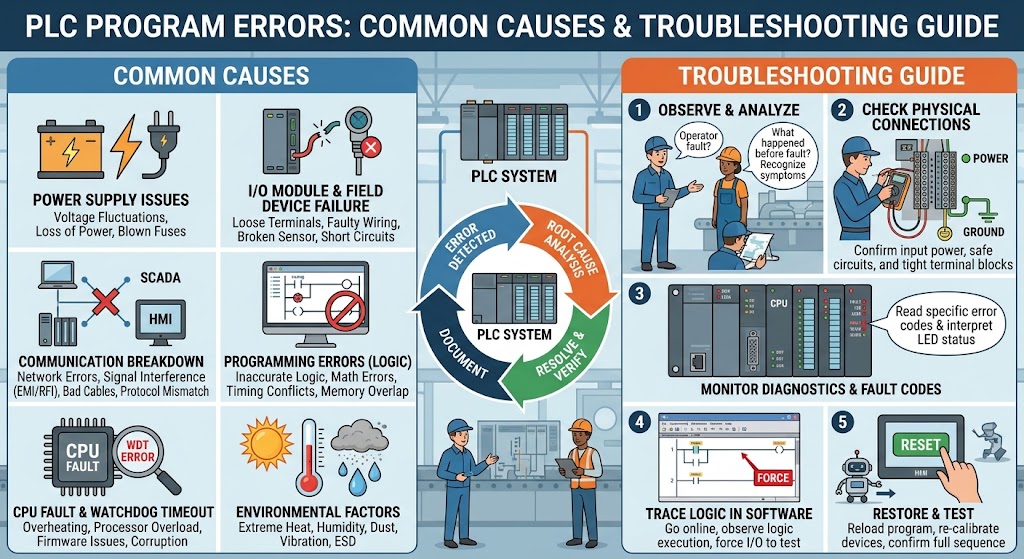
PLC Program Errors: Common Causes and Troubleshooting Guide
9/30/2026
A PLC program error can cause a machine to stop, prevent an output from turning on, create unexpected machine behavior, or put the PLC into a fault or stop condition.
PLC program problems can result from incorrect ladder logic, programming changes, corrupted memory, configuration errors, incorrect addressing, communication problems, firmware changes, or an incomplete program download.
In a manufacturing environment, troubleshooting a PLC program error requires separating program logic problems from PLC hardware, I/O, communication, and field-device problems.
This guide explains common PLC program errors and provides a practical troubleshooting process.
Read more →
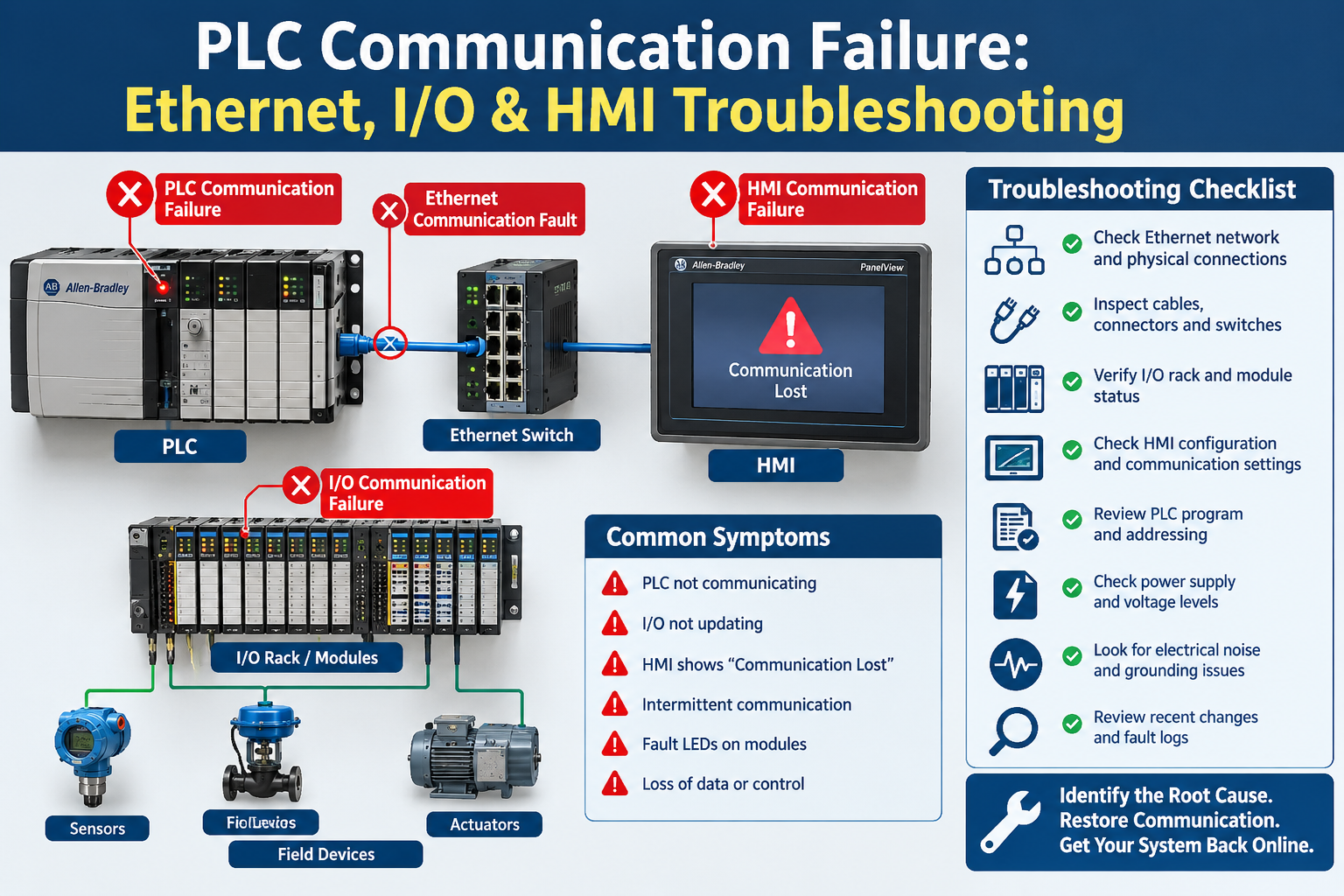
PLC Communication Failure: Troubleshooting Ethernet, I/O and HMI Problems
9/30/2026
A PLC communication failure can stop an automated production line, disconnect an HMI, cause remote I/O to go offline, or prevent PLCs, drives, robots, and other industrial devices from exchanging data.
Communication problems are common in modern manufacturing systems because PLCs increasingly depend on industrial Ethernet networks and distributed devices.
A communication failure does not necessarily mean the PLC itself has failed. The actual problem may be caused by a network cable, Ethernet switch, IP address, communication module, PLC configuration, HMI settings, remote I/O, firmware mismatch, or electrical noise.
This guide explains how to troubleshoot common PLC communication problems systematically.
Read more →
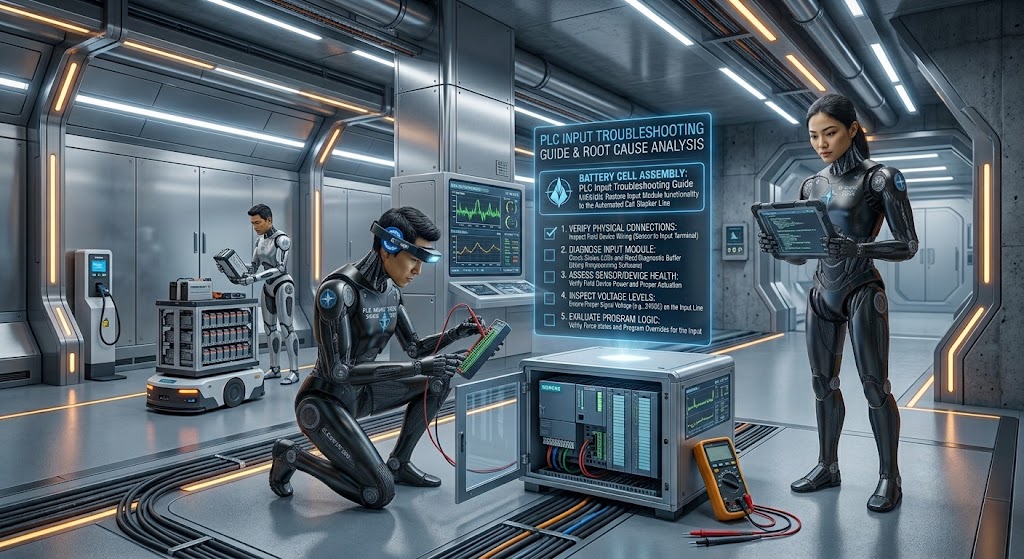
PLC Input Not Working: Causes and Troubleshooting Guide
9/27/2026
A PLC input that is not working can stop a machine from starting, prevent a sensor signal from reaching the controller, or cause an automated process to behave incorrectly. The problem may be caused by a failed sensor, wiring issue, power supply problem, input module failure, incorrect PLC configuration, or a problem with the PLC program.
This guide explains the most common causes of a PLC input not working and provides a practical troubleshooting process for manufacturing and industrial automation systems.
Related article: PLC Repair: 15 Common PLC Problems and How to Troubleshoot Them
Read more →
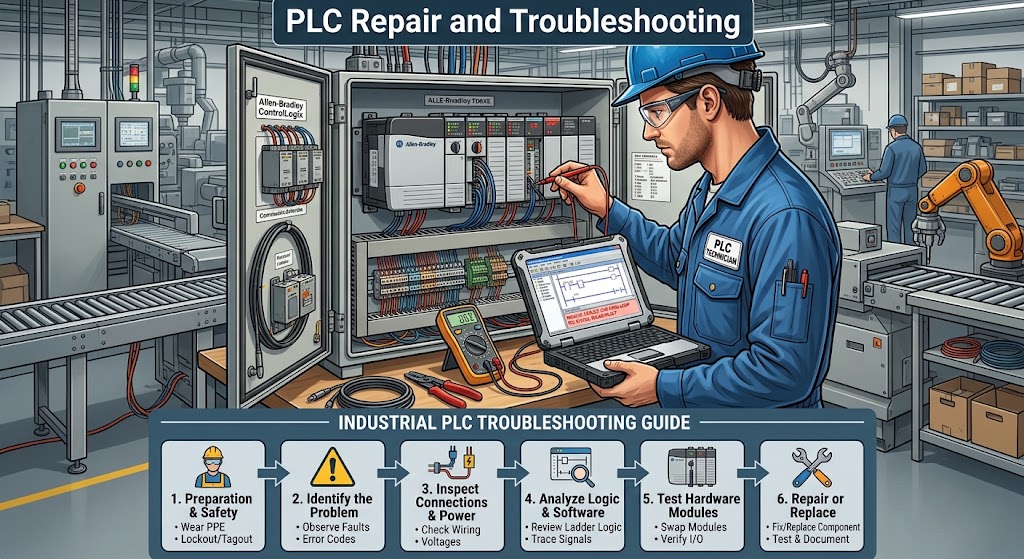
PLC Repair: 15 Common PLC Problems and How to Troubleshoot Them
9/23/2026
Programmable Logic Controllers (PLCs) are the brains of many modern manufacturing and industrial automation systems. PLCs control conveyors, robots, pumps, motors, packaging machines, assembly equipment, battery manufacturing equipment, material handling systems, and many other industrial processes.
When a PLC system fails, the impact can be much larger than a single electrical component failure. A PLC problem can stop an entire production line, create quality problems, trigger machine safety faults, or prevent operators from restarting equipment.
The good news is that a PLC fault does not always mean the PLC itself needs to be replaced.
Many PLC problems are caused by power supplies, wiring, sensors, communication networks, configuration problems, environmental conditions, or connected equipment.
Read more →


