

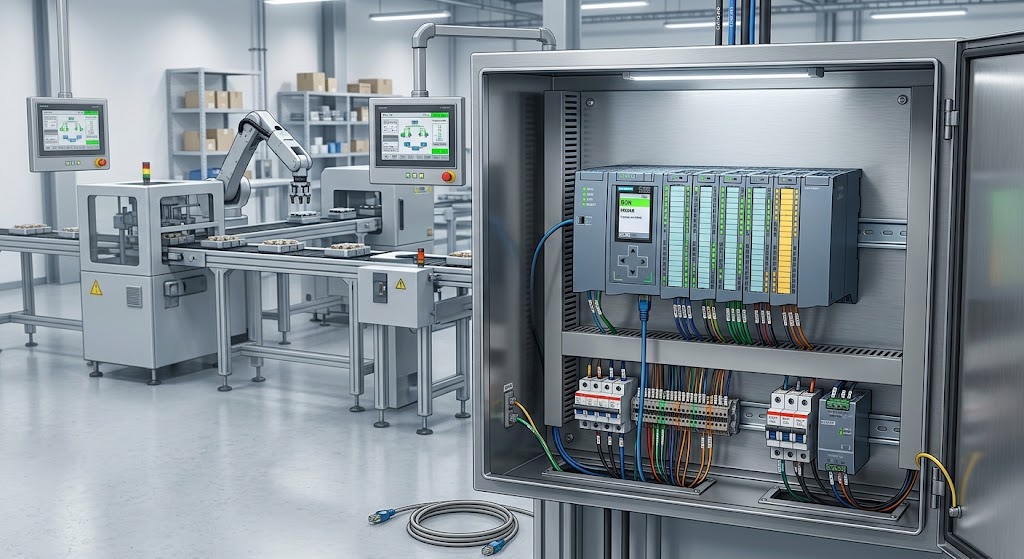
PLC Repair & Troubleshooting: Complete Industrial PLC Troubleshooting Guide
9/23/2026
Programmable Logic Controllers (PLCs) are at the heart of modern manufacturing automation.
When a PLC, I/O module, communication network, or control system fails, the result can be significant production downtime.
This PLC Repair & Troubleshooting Hub provides practical information for diagnosing common PLC problems, identifying root causes, repairing or replacing PLC equipment, and maintaining reliable industrial automation systems.
Whether you are troubleshooting a PLC that will not power on, an input that is not working, a communication failure, an intermittent fault, or an obsolete controller, the guides below provide a structured starting point.
Read more →
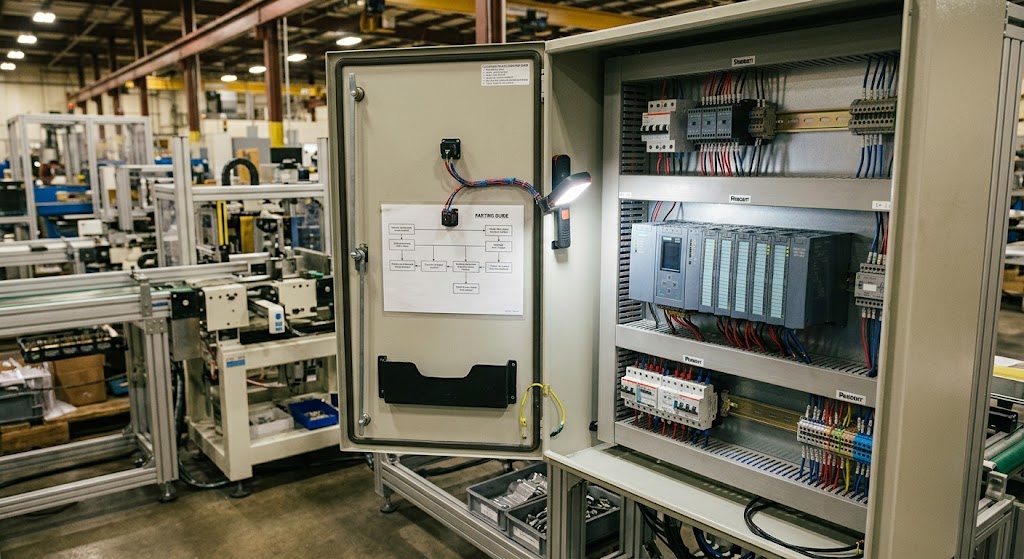
PLC Repair: How to Diagnose a PLC That Will Not Power On
9/27/2026
When a programmable logic controller (PLC) will not power on, an entire manufacturing machine or production line may stop operating.
A PLC that appears to be completely dead can be caused by many different problems. The PLC itself may have failed, but the actual cause could also be a blown fuse, failed power supply, loose wiring, incorrect voltage, a tripped circuit breaker, or a short circuit in connected equipment.
For maintenance technicians and controls engineers, the first goal should be to identify the source of the power problem before replacing the PLC.
This guide explains how to troubleshoot a PLC that will not power on, common causes of PLC power failures, and when PLC repair or replacement may be appropriate.
Read more →
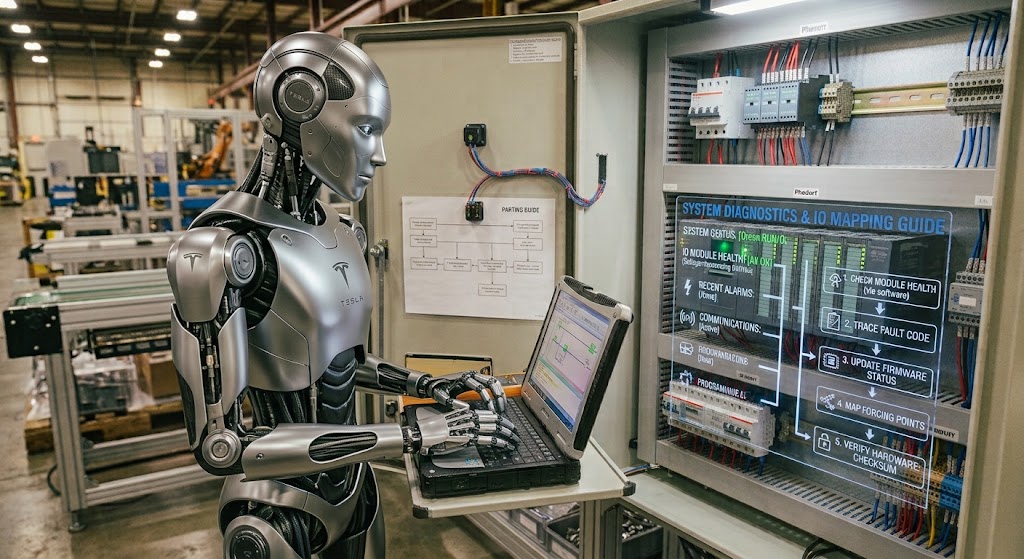
PLC CPU Fault: Common Causes and Troubleshooting Guide
9/27/2026
A PLC CPU fault can stop an entire manufacturing machine or production line. When the controller enters a fault state, maintenance technicians may see a red fault indicator, an error message on the HMI, or a PLC that refuses to enter RUN mode.
However, a PLC CPU fault does not necessarily mean that the PLC CPU itself has failed.
The underlying problem may be related to the PLC program, memory, power supply, I/O modules, communication network, configuration, firmware, or another connected device.
This guide explains the most common causes of PLC CPU faults and provides a systematic approach to PLC troubleshooting, repair, replacement, and preventive maintenance.
Related guide: For a broader list of PLC problems, see PLC Repair: 15 Common PLC Problems and How to Troubleshoot Them.
Read more →


